

Tracing the Evolution of Pipettes: From Simple Tools to Advanced Laboratory Essentials
Pipettes are a staple in any lab environment, used for transporting a measured volume of liquid, often as a media dispenser. But have you ever wondered about the history of these essential tools? How did they come to be and what advancements have been made over the years? In this article, we'll delve into the evolution of pipettes, explore various types and their functions.THE ORIGINS OF PIPETTES
French chemist and microbiologist Louis Pasteur is widely credited with the invention of the first pipettes in the 1940s. Known as the “Father of Medical Microbiology”, his dedication to the study of typhoid and his invention of the “pasteurisation” method that bears his name, he also developed glass pipettes to aid in liquid transfer in his laboratory. These handheld tools helped to prevent contamination and simplify the liquid transfer process.
Developing on Pasteur’s invention, German physician Heinrich Schnitger took this one step further, engineered the first micropipette prototype in the 1950s. He added a spring-loaded piston and removable plastic tip to his pipettes, which allowed operators to accurately aspirate and dispense minuscule volumes of liquid. This revolutionised the industry and his concept is still prevalent in the micropipettes used today. In fact, he was the first person who patented this product in Germany six months after its invention. His application, dated May 1957, entitled “Vorrichtung zum schnellen und exakten Pipettieren kleiner Flüssigkeitsmengen” (Device for the fast and exact pipetting of small liquid volumes), received approval on 24 April 1961.
.jpg)
Did you know people used to pipette with their mouths prior to these inventions?
Image source
MODERN PIPETTES IN THE 21ST CENTURY
Since their inception until today, pipettes have gained such widespread use that they form the backbone of almost virtually any laboratory that handle liquid samples today. The design of micropipettes has been further improved as huge strides in technology were made, and scientific demands become all the more challenging and rigorous.
Throughout the years, scientists have sought to overcome limitations associated with micropipette design. Highly advanced and automated pipette models are now available and even fully automated liquid handling workstations which doesn’t require constant user operation can be found on the market to support scientific research.
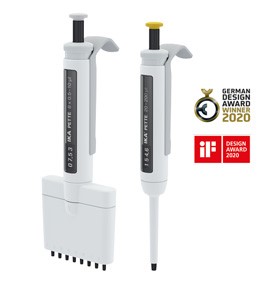
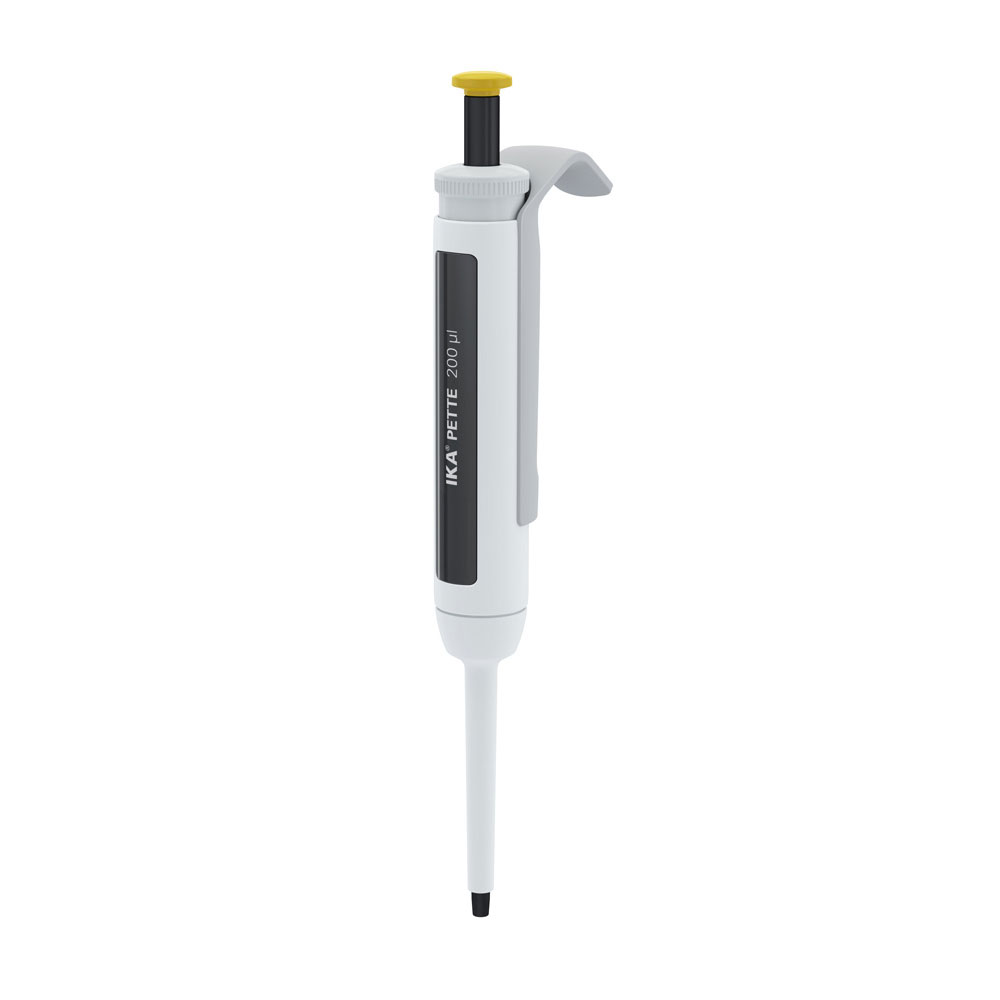
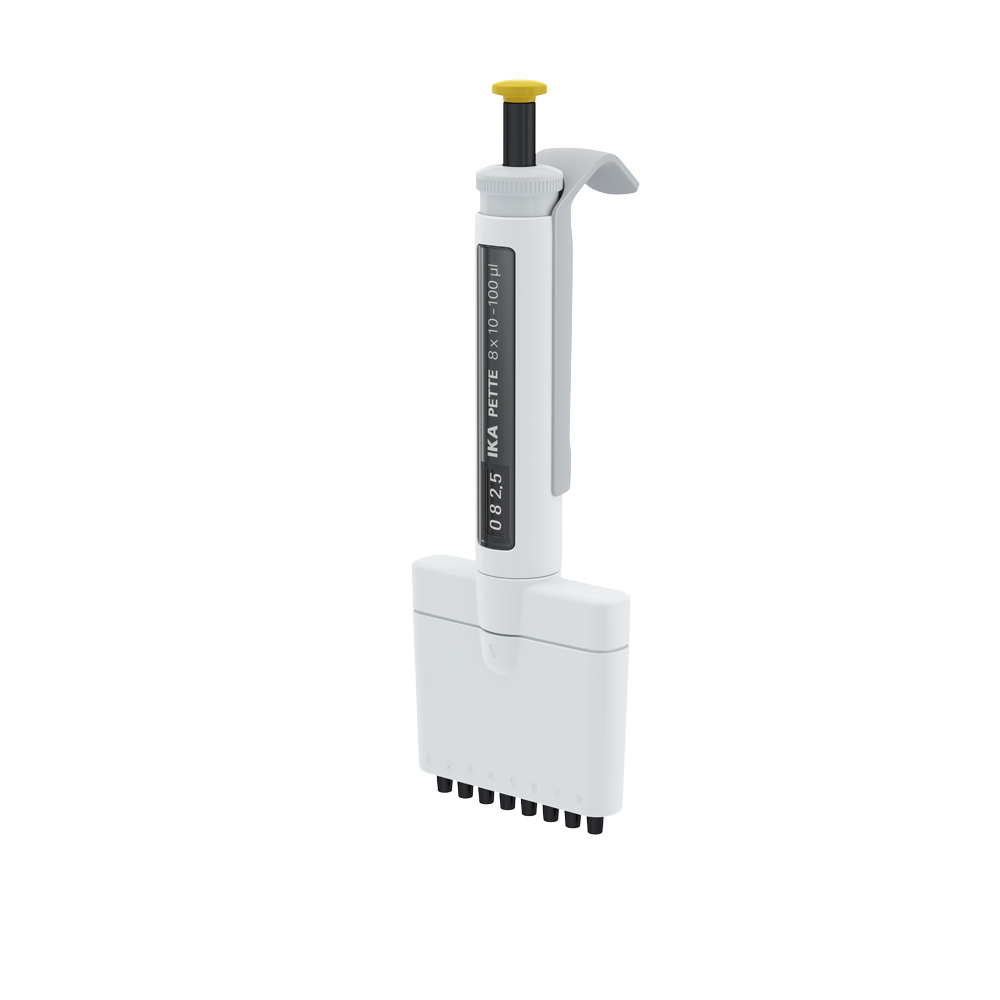
IKA, a leading manufacturer of laboratory equipment, joined this liquid handling market in 2019 and produces a range of mechanical single channel and multichannel pipettes. As a German manufacturer of pipettes, following the footsteps of Heinrich Schnitger, they have been designed and optimised to allow the best possible accuracy during the pipetting process. The technology and design of the IKA PETTE pipettes have been recognised and awarded the German Design Award and the iF Design Award since its launch. This means that the IKA pipettes are both robust and functional and able to meet the gruelling daily challenges in the laboratory.
PARTS OF A PIPETTE
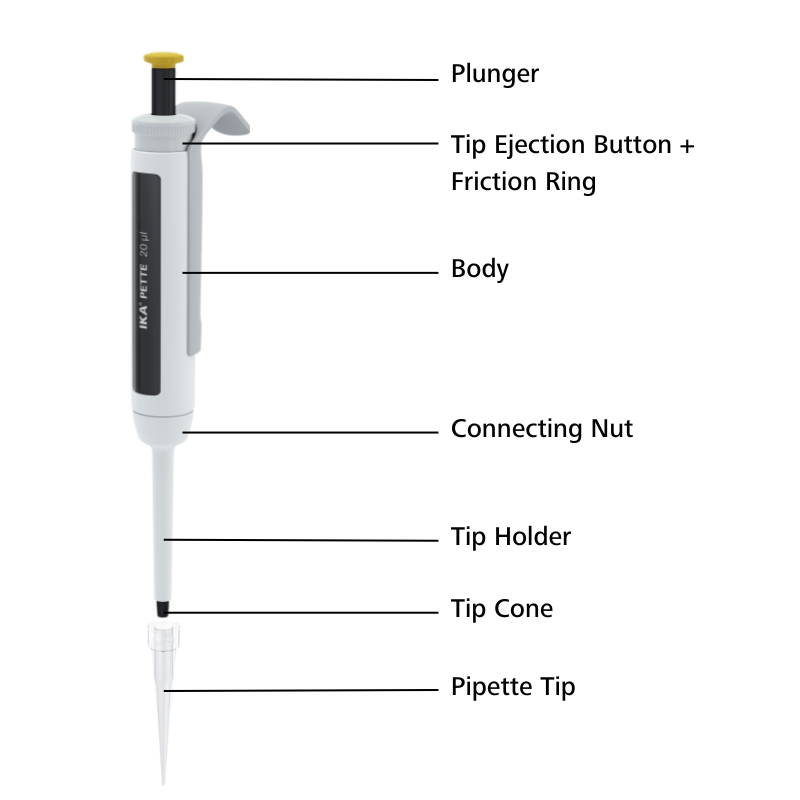
A pipette is a long, narrow tube equipped with graduated markings for measuring liquid, a detachable tip for dispensing, and a mechanism for drawing in and releasing the liquid. The tip is typically discarded after use to maintain sample purity.
- Plunger or Piston: Located within the barrel, this movable component generates a vacuum to aspirate liquid and controls the volume to be dispensed.
- Button or Lever: This mechanism engages the plunger or piston, allowing for the aspiration and dispensing of liquids.
- Barrel: The main body of the pipette, usually made of glass or plastic, holds the liquid being measured.
- Tip: A removable attachment at the barrel's end that dispenses the liquid. Tips are generally disposable and are made of plastic or polyethylene.
TYPES OF PIPETTES
| Volumetric Pipettes Volumetric pipettes are precision instruments used to measure and transfer specific volumes of liquid. Typically constructed from glass or plastic, these pipettes are marked with graduations that indicate the exact volume they hold. Due to their high accuracy, they are commonly employed in analytical procedures where precise measurements are essential. |
Graduated Pipettes Graduated pipettes are versatile instruments designed to measure varying volumes of liquid. The stem is marked with graduated lines, allowing for the measurement of different quantities. Although they are less precise than volumetric pipettes, their flexibility makes them suitable for a wide range of applications. |
Serological Pipettes Serological pipettes are a type of graduated pipette commonly used in cell culture and microbiology applications. Typically made of plastic, these pipettes are designed for single-use and are discarded after use. Although they are less accurate than glass pipettes, they offer greater ease of use and convenience. |
| Transfer Pipettes Transfer pipettes are practical tools for transferring small volumes of liquid, typically measured in milliliters. They are often used for tasks such as adding reagents to test tubes or dispensing solutions into cuvettes. Although they lack the precision of volumetric or graduated pipettes, they are highly affordable and easy to use. |
Micropipettes Micropipettes are specialized instruments designed for measuring and transferring extremely small volumes of liquid, typically in microliters (µL). They are essential in fields such as molecular biology, biochemistry, and genetics. While micropipettes are more expensive than other types of pipettes, they offer exceptional accuracy and precision, making them indispensable for precise laboratory work. |
Electronic Pipettes Electronic pipettes are advanced micropipettes that utilize an electronic motor to aspirate and dispense liquids. They offer exceptional precision and accuracy, making them ideal for high-throughput tasks. While electronic pipettes are more expensive than manual pipettes, they provide faster operation and greater ease of use. |
i. ref. Source
CONCLUSION
The history of pipettes is a testament to the evolution of scientific instruments. From the early glass tubes to the advanced pipettes of today, this tool has become essential for accurate measurement in laboratories. Whether it's a simple pipette dropper or a sophisticated gilson pipette, understanding the history and function of these devices is key to appreciating their role in scientific discovery.
As technology continues to advance, we can only imagine how the pipette will evolve, further aiding researchers in their quest for knowledge and innovation. For now, the pipette stands as a symbol of precision and reliability in the scientific community, its history as rich as the discoveries it has helped to unveil.
Discover all IKA PETTE models here.
RELATED CONTENT
 IKA Pipettes |
 IKA PETTE multi |
VIDEO

IKA Single- and Multichannel pipettes
Related Products

请联系我们