

How to Choose the Right Bioreactor for Your Research
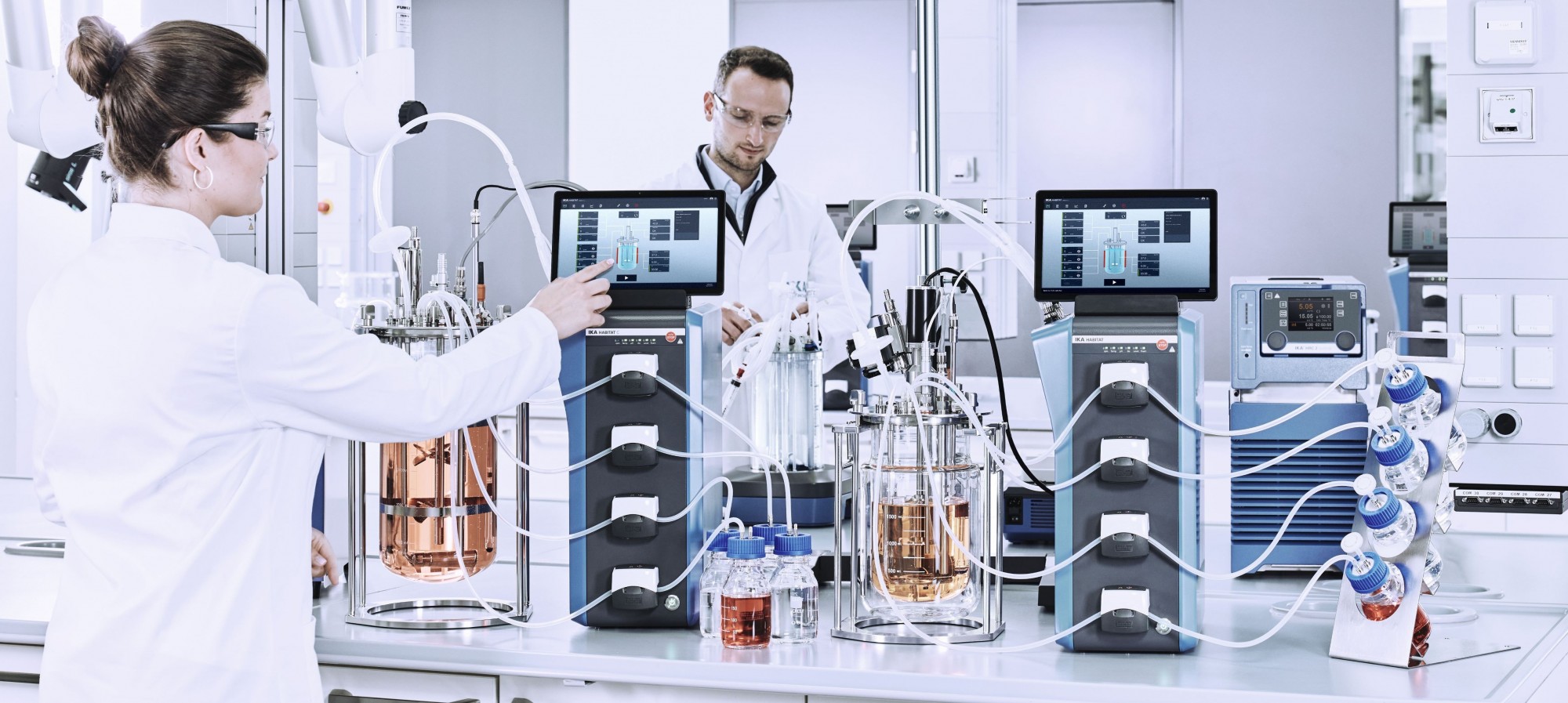
Choosing the right bioreactor is a critical step in ensuring the success of any research project in biotechnology. Whether you are cultivating mammalian cells, microorganisms, or photosynthetic organisms like algae, the type of bioreactor you select will influence everything from productivity to scalability. With various bioreactor types available on the market—ranging from benchtop models to industrial-scale systems—making the right decision can seem overwhelming. However, by evaluating your process needs, operational scale, and desired outcomes, you can choose a bioreactor that fits your research goals. In this article, we’ll walk you through the essential factors to consider when selecting a bioreactor, such as scale, material, feeding strategies, and more. Whether you’re working in a small laboratory or planning for industrial-scale production, this guide should help you make the right choice.
TYPES OF BIOREACTORS AND THEIR APPLICATIONS
Before diving into the specific features of bioreactors, it’s important to understand the various types and their applications. Each type serves a specific purpose and is suited to different scales, organisms, and research goals.
1. Lab-scale vs. pilot-scale vs. industrial-scale bioreactors
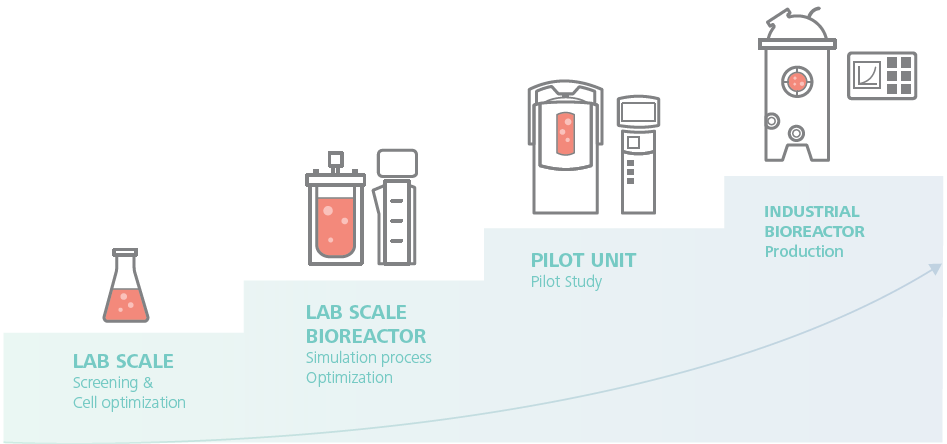
|
Bioreactors can also be classified based on their mixing and aeration mechanisms.
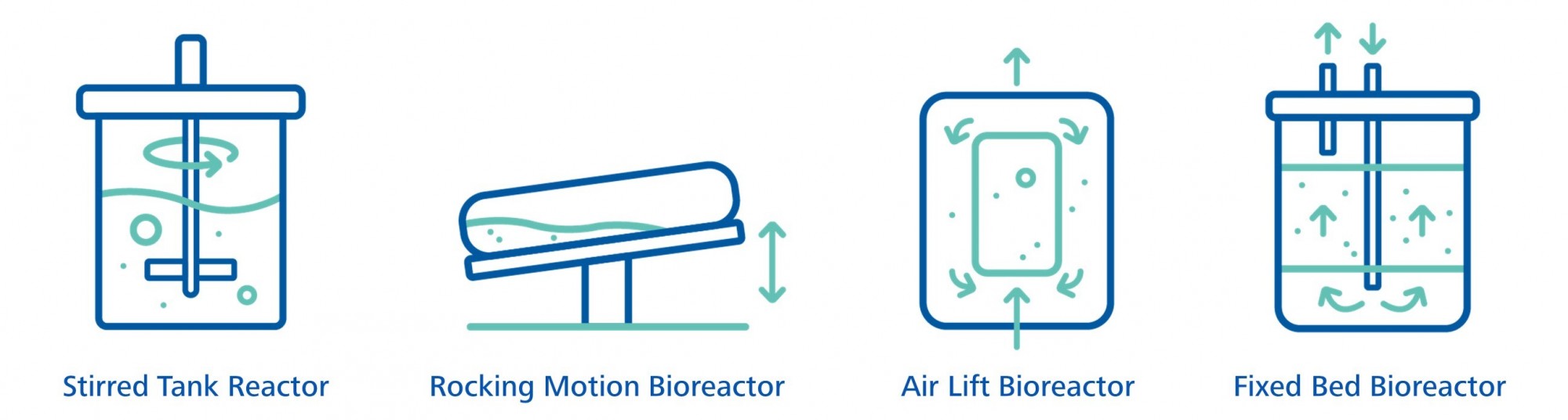
|
3. Single-use vs. multi-use bioreactors
Bioreactors are also categorized as single- or multi-use, each with unique impacts on cost, operational flexibility and sterility. Both available across scales, from lab to industrial, the choice often depends on specific process and/or research needs.
|
4. Cell culture bioreactors vs. fermenters
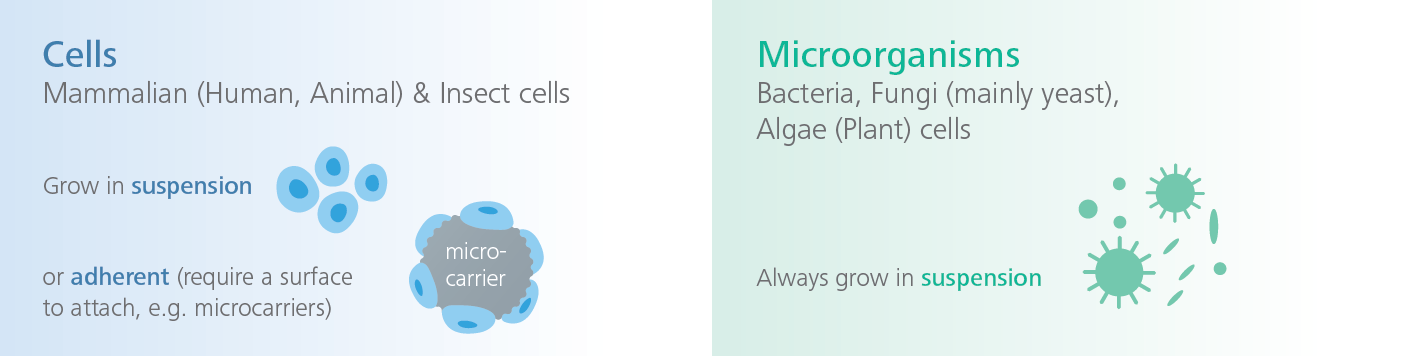
Another critical consideration when selecting a bioreactor is the type of organisms being cultivated. The choice between cell culture bioreactors vs. fermenters will depend on whether you are working with delicate mammalian cells or microorganisms.
|
5. Photobioreactors
As a specialized type of stirred-tank reactor (STR), photobioreactors provide the ideal environment for photosynthetic organisms, like algae. These bioreactors are designed to optimize light exposure while maintaining control over temperature, gas exchange, and nutrient supply.
Additionally, there are specialized photobioreactors that are not based on STR, offering a range of configurations optimized for various applications. These include tubular photobioreactors, flat-panel photobioreactors, and hybrid designs, each tailored to enhance specific aspects of the cultivation process, such as light distribution, scalability, and efficiency.
Use case: Photobioreactors are critical in research on carbon capture, biofuel development, and the production of nutraceuticals from algae. Their design ensures that light can penetrate the culture evenly, allowing for efficient photosynthesis. |
6. Batch, fed-batch, and continuous bioreactors
Though not types of bioreactors themselves, feeding strategies determine how nutrients are supplied to the culture during the growth process. Understanding these strategies is important when selecting a bioreactor that matches specific process needs.
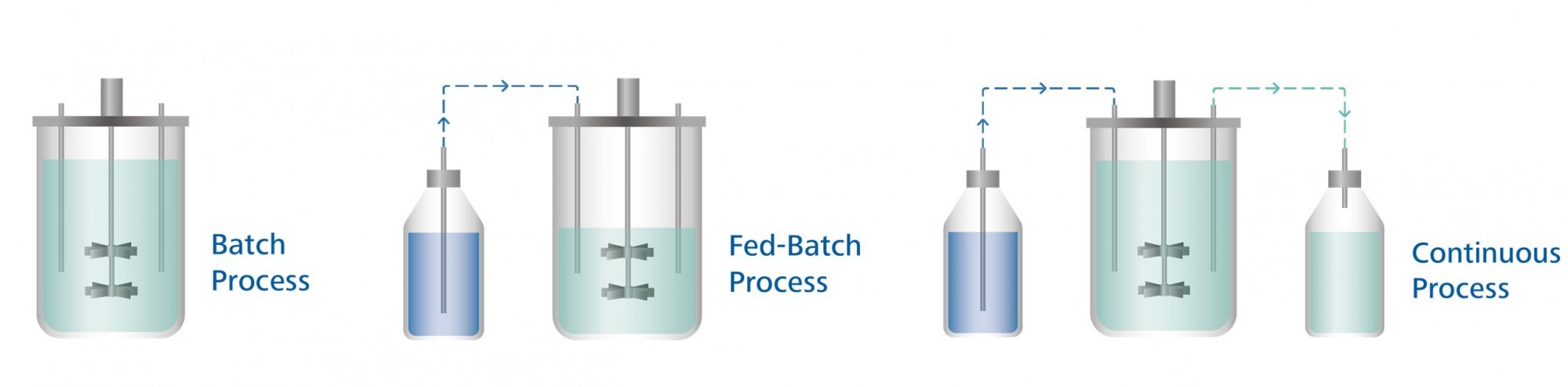
|
KEY FACTORS TO CONSIDER WHEN CHOOSING A BIOREACTOR
Now that we’ve discussed the different types of bioreactors and feeding strategies, let's look at the key factors that should guide your selection process.
1. Process needs and scale
The first consideration when choosing a bioreactor is determining the scale of your research or production process. Are you conducting experiments on a small scale, or are you planning for full-scale production? The size of the bioreactor must align with your goals, as well as the expected volumes of medium and product. For small-scale academic research, a lab-scale bioreactor may be ideal, allowing you to control all parameters at a manageable scale. However, for projects transitioning to commercial production, pilot-scale or industrial-scale bioreactors provide the scalability necessary for larger outputs.
2. Type of cells or organisms
The type of cells or organisms you are working with plays a critical role in determining which bioreactor will be most suitable. Mammalian cells, for example, require a bioreactor that offers gentle agitation, controlled oxygenation, and precise pH regulation to ensure cell viability. On the other hand, microorganisms such as bacteria and yeast can tolerate more aggressive mixing and higher oxygen levels. Choosing a bioreactor designed specifically for your organism type will help ensure optimal growth conditions and productivity.
3. Oxygen requirements
The gas exchange system in your bioreactor will have a direct impact on the growth and metabolism of your culture. Many processes, particularly those involving aerobic organisms, require high oxygen levels, which are supplied through spargers or surface aeration systems. For processes involving delicate cells, it’s essential to select a bioreactor that provides efficient oxygen transfer without creating excessive shear stress or foam formation. Efficient gas exchange ensures that your culture receives the oxygen it needs while preventing the accumulation of offgas.
4. Sensors and monitoring
Modern bioreactors come equipped with a range of sensors that monitor critical parameters such as temperature, pH, dissolved oxygen, and nutrient levels in real-time. These sensors allow researchers to adjust conditions as needed to maintain optimal growth environments.
If your research requires tight control over environmental conditions, consider choosing a bioreactor with advanced monitoring and control systems. This can significantly improve reproducibility and reduce the risk of variability in your experiments.
5. Flexibility and modularity
Choosing a modular bioreactor that offers flexibility can be advantageous, particularly if your research needs evolve over time. Many bioreactors today allow for adjustments in vessel size, feeding strategies, and control systems to accommodate a variety of applications. This flexibility makes it easier to scale up your research or shift focus to different organisms or processes without investing in entirely new equipment.
6. Costs and ease of operation
Cost is a critical factor, especially when evaluating long-term expenses. While single-use bioreactors may have lower initial costs, multi-use reactors are generally more cost-effective over their lifetime, as they reduce recurring expenses associated with disposables.
Additionally, ease of operation is important; a bioreactor with user-friendly features and straightforward maintenance requirements can streamline workflows, reduce training needs, and minimize the potential for operator errors.
CONCLUSIONChoosing the right bioreactor involves more than just picking a system that fits your budget. It’s a decision that will impact the scalability, productivity, and efficiency of your research. By considering the type of organism you’re working with, your operational scale, the feeding strategies that fit your process, and the level of control and monitoring required, you can make an informed choice that enhances your bioprocessing outcomes.In bioprocessing, the right bioreactor is a powerful tool that not only supports your current research but also opens the door to future possibilities. Opting for a flexible, sustainable, and cost-effective solution, such as a multi-use STR, can provide lasting value and adaptability as your research evolves. Consulting with bioreactor manufacturers and application specialists can help determine the optimal system for your specific needs. Want to learn more about IKA´s bioprocessing solutions and how they can support your scientific journey? Get in touch and schedule a call! |
Related Products

请联系我们