
< Back to Blog overview
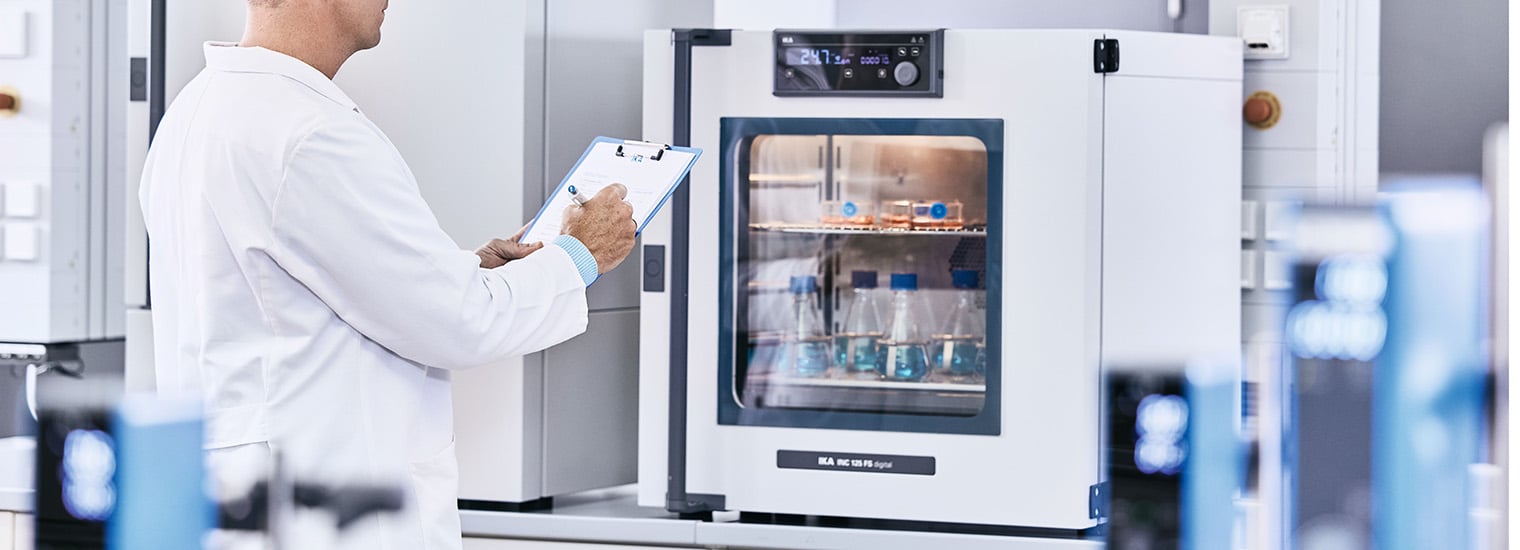
The quality and yield of the produced protein, however, are extremely sensitive to cultivation conditions. Temperature, oxygen availability, and mixing all play decisive roles. This is where the right incubator makes all the difference.
Orbital shaking solves this elegantly. By continuously swirling the liquid, it renews the surface between the culture broth and the air above it and each renewal allows fresh oxygen to dissolve in. In general, increasing shaking speed and orbit diameter enhances oxygen transfer into the culture medium. Scientists express this as the Oxygen Transfer Rate (OTR).
Too little shaking leads to oxygen limitation, slowing growth and reducing protein yields. Excessive shaking may negatively affect sensitive cultures through increased foaming, evaporation, or shear stress. The right balance is essential, and it depends not just on shaking speed, but also on the shaking orbit diameter.
The INC 125 FCS digital has a wide shaking speed range (10 to 300 rpm).
At identical shaking speeds, the 25 mm orbit moves a greater volume of liquid per revolution than the 20 mm orbit. This increases the gas–liquid interface renewal and can significantly boost oxygen transfer. Switching the easily removable and patented IO SP 20 or IO SP 25 shaker platform takes only moments, allowing labs to adapt the incubator precisely to the experiment at hand, tool free!
The solution to this challenge is a temperature shift after induction: allow cells to grow to the right density at 37°C, then cool down to 18-25°C before initiating target protein production through induction. At lower temperatures, the folding machinery has more time to work correctly, dramatically improving the yield of soluble, functional protein.
This only works if your shaking incubator with cooling function can cool effectively, reliably and energy efficiently. The INC 125 FCS digital has a wide temperature range (5 to 80°C) and handles cooling with an important environmental advantage:
The INC 125 FCS digital incubator uses R290 (propane) as its cooling agent which is a natural substance with a Global Warming Potential (GWP) of just 3, compared with GWPs exceeding 1,000 for many conventional synthetic refrigerants. This makes the cooling system not only highly efficient but also a genuinely sustainable choice for the modern laboratory.
Reproducibility across all your flasks
The forced-convection system ensures uniform temperature distribution throughout the 125-liter stainless steel chamber whether you run four flasks or 24.
Did you know that all IKA incubators have an integrated decontamination cycle designed to reduce the risk of microbial contamination and cross-contamination? Find out more about our incubators and tempering chambers here: click
Recombinant Protein
- A protein produced by a host organism (like E. coli) carrying an artificially introduced gene.
OD₆₀₀
- Optical density at 600 nm — a simple measurement used to estimate how many cells are in your flask.
OTR
- Oxygen Transfer Rate — a measure of how much oxygen can be transferred from the air into the culture medium per unit time. Adequate OTR is essential for aerobic microbial growth and protein expression.
IPTG
- A chemical compound that acts as a molecular switch, activating the gene responsible for producing the target protein.
Inclusion Bodies
- Clumps of misfolded protein that form when expression happens too fast or at too high a temperature — usually inactive and hard to recover.
Baffled Flask
- A shake flask with indentations on its inner wall that improve turbulence and oxygen transfer compared to a smooth flask.
R290 (Propane)
- A natural refrigerant with very low Global Warming Potential (GWP), used in the INC 125 FCS Digital cooling system.

IKA Incubators
Related Products
From Genes to Proteins: Optimized cultivation with the INC 125 FCS digital
Why protein expression matters
Imagine wanting to study a specific human protein. Perhaps an enzyme involved in cancer, or a hormone needed for a new therapy. You cannot simply extract enough of it from the human body. Instead, scientists take the genetic blueprint for that protein and insert it into a microorganism such as E. coli. The bacterium then reads the instructions and produces the protein in large, usable quantities. This is recombinant protein expression, and it lies at the heart of modern drug development, diagnostics and biotechnology.The quality and yield of the produced protein, however, are extremely sensitive to cultivation conditions. Temperature, oxygen availability, and mixing all play decisive roles. This is where the right incubator makes all the difference.
Why do bacteria need shaking?
During growth, E. coli cells consume oxygen continuously to generate the energy they need for division and protein synthesis. The challenge: oxygen dissolves only very poorly in water. If the culture remained static, oxygen transfer into the medium would be severely limited and oxygen gradients could develop throughout the flask.Orbital shaking solves this elegantly. By continuously swirling the liquid, it renews the surface between the culture broth and the air above it and each renewal allows fresh oxygen to dissolve in. In general, increasing shaking speed and orbit diameter enhances oxygen transfer into the culture medium. Scientists express this as the Oxygen Transfer Rate (OTR).
Too little shaking leads to oxygen limitation, slowing growth and reducing protein yields. Excessive shaking may negatively affect sensitive cultures through increased foaming, evaporation, or shear stress. The right balance is essential, and it depends not just on shaking speed, but also on the shaking orbit diameter.
Choosing the right shaking platform: SP20 or SP25?
The INC 125 FCS digital features an easily removable shaking platform, available in two configurations. The choice between them directly affects oxygen transfer and mixing efficiency in your sample flasks.
SP20
|
SP25
|
Orbit diameter and shaking speed jointly determine mixing intensity. Increasing orbit diameter
|
The INC 125 FCS digital has a wide shaking speed range (10 to 300 rpm).
At identical shaking speeds, the 25 mm orbit moves a greater volume of liquid per revolution than the 20 mm orbit. This increases the gas–liquid interface renewal and can significantly boost oxygen transfer. Switching the easily removable and patented IO SP 20 or IO SP 25 shaker platform takes only moments, allowing labs to adapt the incubator precisely to the experiment at hand, tool free!
The power of sub-ambient cooling
Here is something many scientists learn the hard way: expressing recombinant proteins at 37°C (the optimal growth temperature for E. coli) often produces proteins that misfold and clump together into useless, insoluble aggregates called inclusion bodies. The cells grow fast, but the protein “production line” runs too quickly for proper folding.The solution to this challenge is a temperature shift after induction: allow cells to grow to the right density at 37°C, then cool down to 18-25°C before initiating target protein production through induction. At lower temperatures, the folding machinery has more time to work correctly, dramatically improving the yield of soluble, functional protein.
This only works if your shaking incubator with cooling function can cool effectively, reliably and energy efficiently. The INC 125 FCS digital has a wide temperature range (5 to 80°C) and handles cooling with an important environmental advantage:
 |
Powered by the natural refrigerant R290 (propane) |
The INC 125 FCS digital incubator uses R290 (propane) as its cooling agent which is a natural substance with a Global Warming Potential (GWP) of just 3, compared with GWPs exceeding 1,000 for many conventional synthetic refrigerants. This makes the cooling system not only highly efficient but also a genuinely sustainable choice for the modern laboratory.
A typical Part of a protein expression workflow
-
Inoculation
Multiple 250 mL baffled flasks are inoculated from a pre-culture. Each flask can contain a different clone, medium formulation, or condition to be screened in parallel. -
Growth phase at 37 °C
Cells are cultivated with shaking (typically 120–250 rpm, depending on flask geometry and oxygen demand) until they reach mid-exponential phase, measured as an optical density (OD₆₀₀) of approximately 0.6–0.8. -
Induction
The inducer IPTG is added to each flask, triggering the genetic switch that activates protein production. -
Temperature shift to 20-22 °C
The active cooling system of the INC 125 FCS digital ensures uniform temperature distribution while cooling to the target setpoint across the entire chamber. -
Overnight expression
Protein production continues at low temperature with continuous shaking. The incubator maintains stable conditions throughout – even overnight, unattended. Remote control and monitoring are also possible using IKA control software Labworldsoft®, which allows continuous monitoring and control of incubator conditions and operating parameters. Via USB-C, the INC 125 FCS digital can be connected to your computer and controlled through Labworldsoft®. -
Harvest and analysis
Cells are collected and lysed. Protein content and quality are assessed by SDS-PAGE or activity assays, revealing which conditions produced the best results.
What makes the INC 125 FCS digital stand out
Hint:Reproducibility across all your flasks
The forced-convection system ensures uniform temperature distribution throughout the 125-liter stainless steel chamber whether you run four flasks or 24.
Did you know that all IKA incubators have an integrated decontamination cycle designed to reduce the risk of microbial contamination and cross-contamination? Find out more about our incubators and tempering chambers here: click
Quick Reference Glossary
Recombinant Protein
- A protein produced by a host organism (like E. coli) carrying an artificially introduced gene.
OD₆₀₀
- Optical density at 600 nm — a simple measurement used to estimate how many cells are in your flask.
OTR
- Oxygen Transfer Rate — a measure of how much oxygen can be transferred from the air into the culture medium per unit time. Adequate OTR is essential for aerobic microbial growth and protein expression.
IPTG
- A chemical compound that acts as a molecular switch, activating the gene responsible for producing the target protein.
Inclusion Bodies
- Clumps of misfolded protein that form when expression happens too fast or at too high a temperature — usually inactive and hard to recover.
Baffled Flask
- A shake flask with indentations on its inner wall that improve turbulence and oxygen transfer compared to a smooth flask.
R290 (Propane)
- A natural refrigerant with very low Global Warming Potential (GWP), used in the INC 125 FCS Digital cooling system.
RELATED CONTENT
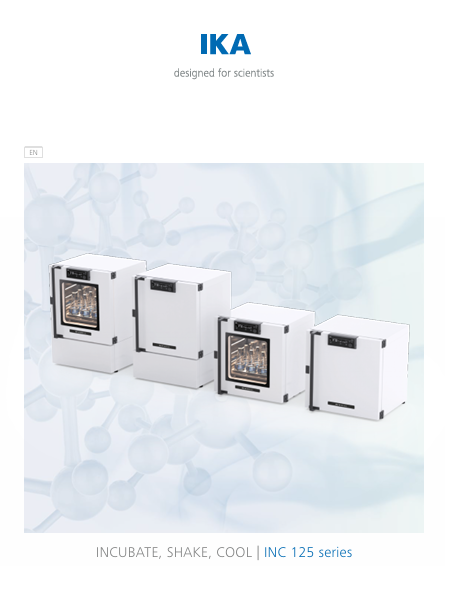 INCUBATE, SHAKE, COOL INC 125 series |
VIDEO
IKA Incubators
Related Products


 R290


If you have any questions or wish to receive a personal quotation, please contact our sales team
请联系我们
< Back to Blog overview请联系我们