
< Back to Blog overview

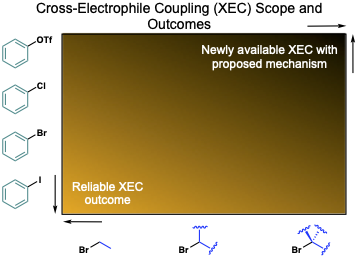
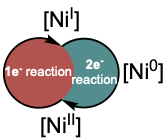
Cross-electrophile coupling of aryl and alkyl electrophiles rely on the merger of an electrochemically active complex that selectively reacts through 1e– processes and an electrochemically inactive Ni0(phosphine) complex that selectively reacts with aryl electrophiles through 2e– processes. Accessing Ni0(phosphine) intermediates is the key challenge.
Related Products
Controlling Ni redox states by dynamic ligand exchange for electroreductive Csp3–Csp2 coupling
ELECTROREDUCTIVE CSP3–CSP2 COUPLING
This case study was reported in Controlling Ni redox states by dynamic ligand exchange for electroreductive Csp3–Csp2 coupling | Science C. S. Sevov et al., Science. 2022, 376, 410Cross-electrophile coupling of aryl and alkyl electrophiles rely on the merger of an electrochemically active complex that selectively reacts through 1e– processes and an electrochemically inactive Ni0(phosphine) complex that selectively reacts with aryl electrophiles through 2e– processes. Accessing Ni0(phosphine) intermediates is the key challenge.
DISCOVERY OF A NOVEL PATHWAY FOR ELECTROCHEMICAL GENERATION AND APPLICATION IN ALKYLATION REACTIONS
The authors uncover a previously unknown pathway for electrochemically generating these key complexes at mild potentials through a choreographed series of ligand-exchange reactions. The mild methodology is applied to the alkylation of a range of substrates including natural products and pharmaceuticals.
SIMPLIFIED DIAGRAM OF CATALYTICAL MECHANISM
RESULT
RELATED CONTENT
 ElectraSyn Case Studies |
 IKA Electrosynthesis |
VIDEO
 ElectraSyn 2.0 |
 ElectraSyn 2.0 - Keynote Phil S. Baran |
Related Products
If you have any questions or wish to receive a personal quotation, please contact our sales team
请联系我们
< Back to Blog overview请联系我们