
< Back to Blog overview
24_11 (2).png)
You just need one of two things:
Scientists, or chemists, in an industrial setting know it’s easy to get stuck on the magnetic stirrer working principle. You might require a mixer for high-viscosity or large volumes, and in this case, the magnetic stirrer principle is less efficient. We’re going to help you select a stirrer that’s right for your application, based on accuracy, application and results.
Find the Right Stirrer for Your Lab – Explore IKA’s Range
CONTACT NOW
Before discussing magnetic stirrer use in a professional setting, let’s clarify how it works.
When you’re done reading this guide, you’ll understand stirrer uses in laboratory settings and how to choose the right option for your application.
Magnetic field
At its base, your device contains a rotating magnet or a set of electromagnets. Switch the device on and they’ll begin to rotate above the surface.
Magnetic bar
Mixing requires the use of a chemical-resistant component. A stir bar is part of the magnetic stirrer working principle and helps provide continuous mixing.
Magnetic coupling
Synchronous stirring is what makes the magnetic stirrer uses a popular choice among chemists. Your bar and base couple together to stir evenly.
While all of this is happening, the principle of magnetic stirrer (attraction of opposites) takes place. Your stir bar starts rotating, dragging any liquid around it to promote homogenization.
How does a magnetic stirrer work? It uses all of these components to provide uniform mixing that is quiet, consistent, and ideal for small-scale applications.
You’ll have plenty of use of a magnetic stirrer, especially for initial testing where large volumes are not necessary.
Before we offer a diagram of magnetic stirrer uses, let’s review their advantages and limitations.
We’ll explain below.
But that’s where the working principle of an overhead stirrer differs
You’ll find that these mechanical devices work for:
And there are multiple types of overhead stirrer impellers, such as an anchor, paddle, or turbine, which must be considered.
Drive motor
Operational power is necessary in every overhead mixer lab. This is what powers the mixing shaft and allows you to adjust speed settings.
Shaft
A metal rod that connects the motor and impeller.
Impeller
The blade that agitates the liquid.
Stand and clamp
An overhead mixer lab requires a component that keeps the vessel secure.
Depending on your setup, you may also have a controller for convenient speed and torque adjustments.
View our overhead stirrers or contact us, and one of our representatives will be happy to assist you.
You now have a decision to make. You know basic magnetic stirrer uses and have an understanding of an overhead mixer lab.
But which is right for you?
For large volumes, overhead is ideal.
For cases where closed vessels are ideal, a magnetic stirrer works best. You can eliminate the risk of contamination with magnetic units, but there are specialized overhead models that can also work.
A magnetic unit can work well in this use case, but will require a stronger coupling.
Metal impellers must be reconsidered with fragile cells, where magnetic models work best.
Now, let’s compare your laboratory equipment in the table below.
Magnetic vs. Overhead Stirring: Side-by-Side Comparison
To do that, assess your experimental needs.
Magnetic stirrers Overhead stirrers
Avoid these common mistakes to choose the right unit.
For magnetic stirrer use:
For stirrer uses in laboratory settings, always ensure:
For a magnetic beaker mixer:
Upgrade Your Lab with IKA Magnetic and Overhead Stirrers. Our Team is Always Here to Help
CONTACT NOW
The difference between magnetic and overhead stirrer models is as follows:
A digital overhead stirrer is the better option for solutions like:
A mechanical overhead stirrer is the better option for large volumes.
Along with stirrer uses in laboratory settings, consider your mixing volume. Magnetic stirrers work well for simple or small-scale mixing. Overhead mechanical units are more suitable for large volume batches.
MICROSTAR control
Related Products
Choosing the Right Mixer: Magnetic vs. Overhead Stirring Explained
Chemists, what do your emulsions and solutions require? Consistent mixing across applications. Repeatable results — those where accuracy and efficiency matter most are achievable.You just need one of two things:
- Magnetic stirrers
- Overhead stirrers
Scientists, or chemists, in an industrial setting know it’s easy to get stuck on the magnetic stirrer working principle. You might require a mixer for high-viscosity or large volumes, and in this case, the magnetic stirrer principle is less efficient. We’re going to help you select a stirrer that’s right for your application, based on accuracy, application and results.
Find the Right Stirrer for Your Lab – Explore IKA’s Range
CONTACT NOW
What Is a Magnetic Stirrer?
Your lab is filled with instruments. Beakers, flasks and often magnetic stirrers are common. Liquids must be properly combined without interference from:- Excessive heat
- Mechanical contact
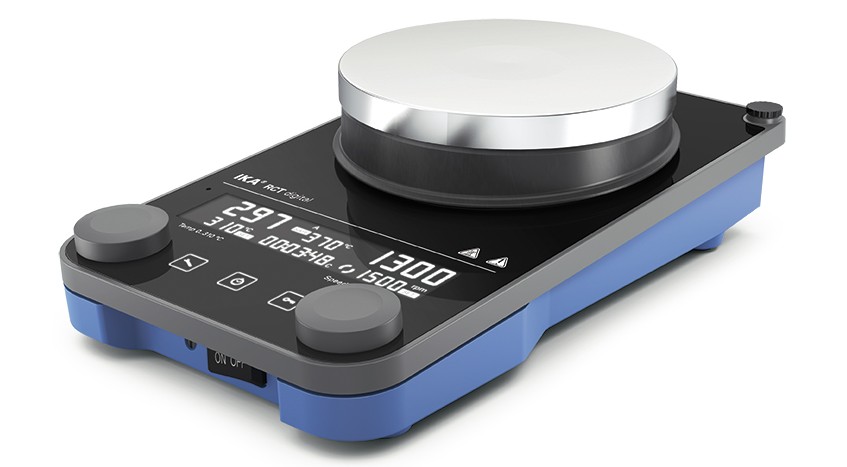
Magnetic stirrer chemistry uses either electromagnets or a motor-driven magnet to stir liquids that you place inside the container.
Before discussing magnetic stirrer use in a professional setting, let’s clarify how it works.
When you’re done reading this guide, you’ll understand stirrer uses in laboratory settings and how to choose the right option for your application.
How Magnetic Stirring Works
Multiple components come together to make this equipment work:Magnetic field
At its base, your device contains a rotating magnet or a set of electromagnets. Switch the device on and they’ll begin to rotate above the surface.
Magnetic bar
Mixing requires the use of a chemical-resistant component. A stir bar is part of the magnetic stirrer working principle and helps provide continuous mixing.
Magnetic coupling
Synchronous stirring is what makes the magnetic stirrer uses a popular choice among chemists. Your bar and base couple together to stir evenly.
While all of this is happening, the principle of magnetic stirrer (attraction of opposites) takes place. Your stir bar starts rotating, dragging any liquid around it to promote homogenization.
How does a magnetic stirrer work? It uses all of these components to provide uniform mixing that is quiet, consistent, and ideal for small-scale applications.
You’ll have plenty of use of a magnetic stirrer, especially for initial testing where large volumes are not necessary.
Before we offer a diagram of magnetic stirrer uses, let’s review their advantages and limitations.
Advantages of Magnetic Stirrers
Sometimes, you’ll choose one type of stirrer over another. How do magnetic stirrers work to your advantage? They offer:- Simple and compact design
- Minimal risk of contamination
- Uniform, consistent mixing
- Heating and stirring at the same time (certain models)
- Quiet operation, compared to an overhead stirrer for high viscosity materials
- Low maintenance
- Chemical resistance
Limitations of Magnetic Stirring
Every laboratory stirrer has its limitations, too:- Small to medium volumes only
- Low torque, making it limited for high-viscosity liquids
- Decoupling at high speeds
- Limited mixing patterns
We’ll explain below.
What Is an Overhead Stirrer?
You know that the principle of a magnetic stirrer provides the best results in low-viscosity applications.But that’s where the working principle of an overhead stirrer differs
You’ll find that these mechanical devices work for:
- Large volumes
- Greater viscous solutions
And there are multiple types of overhead stirrer impellers, such as an anchor, paddle, or turbine, which must be considered.
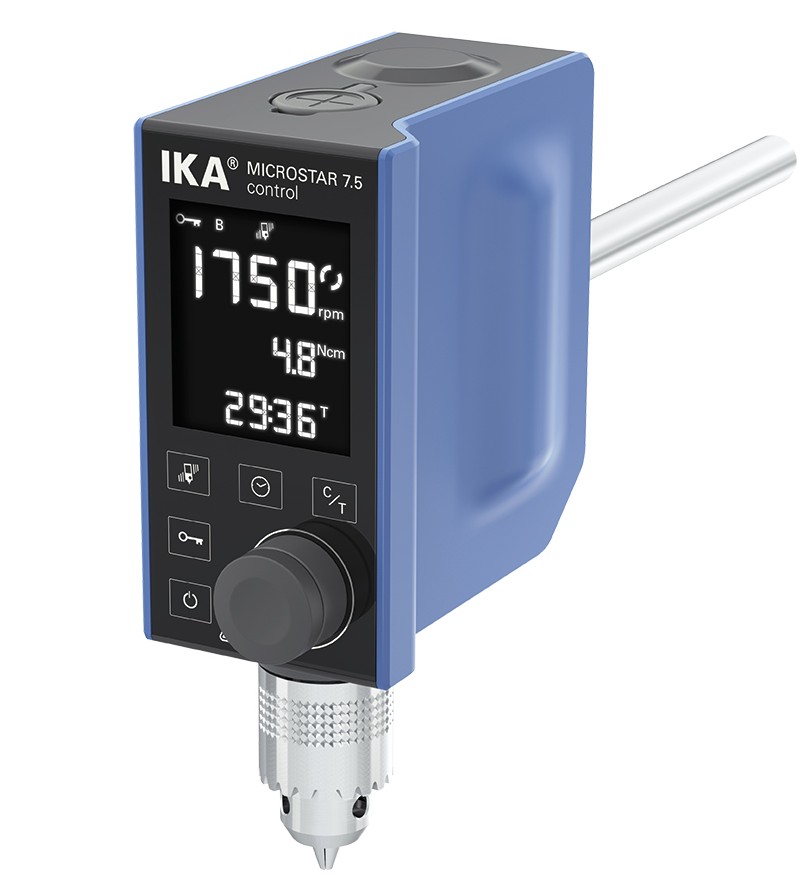
How Overhead Stirring Works
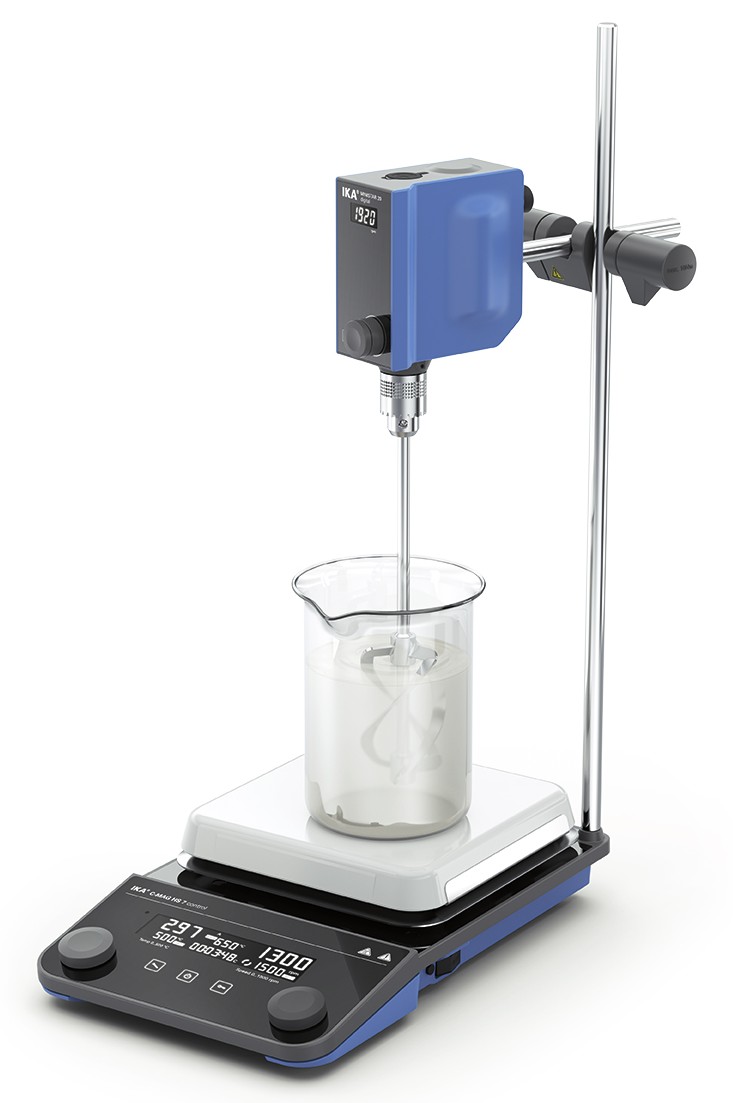
Your laboratory stirrer has multiple components that make it work:Drive motor
Operational power is necessary in every overhead mixer lab. This is what powers the mixing shaft and allows you to adjust speed settings.
Shaft
A metal rod that connects the motor and impeller.
Impeller
The blade that agitates the liquid.
Stand and clamp
An overhead mixer lab requires a component that keeps the vessel secure.
Depending on your setup, you may also have a controller for convenient speed and torque adjustments.
Advantages of Overhead Stirrers
- High mixing power and torque
- Ideal as a large-scale laboratory stirrer
- Versatile impeller options
- Provides heterogeneous mixes
- Works with thick, high-viscosity liquids
- Precision control and torque settings
- Uniform mixing compared to other stirrer types
Limitations of Overhead Stirring
- Risk of contamination if the impeller and shaft are not clean
- Bulky in size, which is standard in any overhead mixer lab
- Noisy operation, especially at high speeds
- Requires more cleaning and maintenance than a chemistry magnetic stirrer
View our overhead stirrers or contact us, and one of our representatives will be happy to assist you.
Deciding Between a Magnetic Stirrer and an Overhead Stirrer
You now have a decision to make. You know basic magnetic stirrer uses and have an understanding of an overhead mixer lab.But which is right for you?
1. Volume of Samples
Magnetic stirrer uses in laboratory settings fall short when large sampling is necessary. Volumes of 15–100 L are typical for an overhead mixer lab application, though some may require stirring up to 1000 LFor large volumes, overhead is ideal.
2. Vessel Shape
Due to the magnetic stirrer principle, they offer ideal options for small vessel openings where an overhead option falls short.For cases where closed vessels are ideal, a magnetic stirrer works best. You can eliminate the risk of contamination with magnetic units, but there are specialized overhead models that can also work.
3. Viscosity of Samples
The magnetic stirrer function lacks the power for high-viscosity mixing. An overhead laboratory stirrer has a strong motor to handle more viscous samples, though the motor can also overheat. Internal fans can prevent this from occurring.A magnetic unit can work well in this use case, but will require a stronger coupling.
4. Heat Required
Your laboratory stirrer may also require heat, such as a hotplate. Water or oil baths may be necessary for larger samples and are applied to the surface of the vessel.5. Type of Mixing Required
Based on the magnetic stirrer working principle, it’s evident that they’re ideal for:- Liquids
- Dissolving powders
- Heat transfer
6. Shear Stress Considerations
High-shear applications favor an overhead stirrer, but you can still control the stress in magnetic units to a degree based on your stir bar.Metal impellers must be reconsidered with fragile cells, where magnetic models work best.
Now, let’s compare your laboratory equipment in the table below.
Magnetic vs. Overhead Stirring: Side-by-Side Comparison
| Feature | Magnetic Stirrer | Overhead Stirrer |
| Mixing method | Non-contact | Direct contact |
| Volume | Small volumes, often 1-3L | Suitable for 100L or more |
| Viscosity | Works best for low-viscosity | Works with low- and high-viscosity |
| Torque/Power | Gentle, low torque mixing | Powerful, high torque mixing |
| Contamination | Low risk | Higher risk |
| Uniformity | Ideal for simple, homogeneous solutions | Works for thick, heterogeneous mixtures or those with solids |
| Cleaning and maintenance | Clean the mixing bar | The shaft and impeller require cleaning |
| Heating option | Hoplate models exist | No built-in heating |
Which Stirrer Is Right for Your Application?
You know the magnetic stirrer principle and equipment used in the lab, but your application also matters.For Small-Scale and Routine Mixing
For small volumes and routine mixing, a magnetic stirrer for chemistry labs is ideal. These units work best for low viscosity liquids and are easy to use.For Large-Scale, Viscous, or Complex Samples
An overhead stirrer is optimal for samples that are:- High volume
- Viscous
- Complex
Balancing Cost, Efficiency, and Experiment Needs
The goal is to choose a magnetic or laboratory overhead stirrer that meets your needs without going over budget.To do that, assess your experimental needs.
- Volume: How much liquid do you need to mix regularly?
- Viscosity: Is it low, medium or high?
- Temperature: Does the sample need to be heated?
- Frequency: Will the stirrer be used occasionally or daily?
Recommended IKA Stirring Solutions
Based on your sample volume, viscosity, heating needs, and mixing requirements, you can explore the relevant IKA stirrer solutions below.Magnetic stirrers Overhead stirrers
Avoiding Common Mistakes When Choosing a Stirrer
Considering magnetic stirrer uses is just one piece of the puzzle when choosing a model. There are many other factors to consider, many of which are easy to overlook.Avoid these common mistakes to choose the right unit.
Underestimating Sample Volume
Underestimating the volume of the sample can cause serious issues, including:- Poor results. A small magnetic stir bar or impeller may not be able to circulate the large volume.
- Equipment strain. Motors may overheat or fail if there is too much liquid in the vessel.
- Safety hazards. The stirrer may generate a vortex that exceeds the vessel’s headspace, which can cause overflow.
Ignoring Viscosity Levels
Every stirrer has its limits when it comes to viscosity. Ignoring this limit can lead to a range of serious problems.For magnetic stirrer use:
- It can create too much drag, which results in uneven mixing.
- The stir bar may chip or snap.
- The motor may become overloaded.
- Spillage or overheating can create a hazardous situation.
- The impeller may fail to move the dense liquid.
- The motor may burn out, and the shaft may become damaged.
- You may experience inconsistent reactions and reproducibility issues.
Overlooking Maintenance and Durability
One of the biggest mistakes you can make when choosing a laboratory overhead stirrer is the maintenance and durability of the unit.- Complicated care requirements can make it difficult to use the unit properly.
- Poor durability may mean frequent repairs or replacements.
Best Practices for Effective Stirring
To ensure safe and reliable function, it’s important to follow best practices for equipment used in lab settings.For stirrer uses in laboratory settings, always ensure:
Proper Setup and Calibration
Your setup will depend on whether you use an overhead or magnetic stirrer function.For a magnetic beaker mixer:
- Choose the right vessel. Glass is ideal.
- Select the right stir bar and place it in the correct position.
- Add liquid carefully.
- Set the speed slowly. Start at a low RPM and gradually increase.
- Use a tachometer or stopwatch to check the rotation speed and adjust as needed.
- Secure the unit on a sturdy stand.
- Clamp the vessel to keep it in place.
- Insert the impeller into the liquid.
- Check stability and alignment.
- Set the speed gradually.
- Use an optical sensor or tachometer to measure the actual shaft RPM
Safety Guidelines for Reliable Mixing
For a safe magnetic stirrer function in microbiology:- Ensure stable placement of the unit. Clamp beakers or flasks to prevent tipping.
- Wear PPE. Use a face shield if necessary.
- Monitor the temperature to avoid overheating.
- Have a clear workspace.
- Know the location of emergency shutoffs.
Extend the Lifespan of Your Stirrer
If you want to maximize the lifespan of your overhead or magnetic stirrer function in laboratory settings, do the following:- Follow the manufacturer’s guidelines for volume and viscosity.
- Use the right stir bar or impeller.
- Never run the machine without liquid.
- Clean the stirrer after each use.
- Store in a dry, dust-free place.
- Avoid overheating the hotplates.
Conclusion – Making the Right Choice
Selecting the right mixer doesn’t have to be complicated. It ultimately comes down to the application and your needs. Now that you understand the difference between a digital overhead stirrer and a magnetic stirrer use, you can correctly determine which type of unit you require.Upgrade Your Lab with IKA Magnetic and Overhead Stirrers. Our Team is Always Here to Help
CONTACT NOW
Q&A
What is the difference between a magnetic and an overhead stirrer?
Magnetic and overhead stirrers are types of equipment used in lab settings.The difference between magnetic and overhead stirrer models is as follows:
- Magnetic models use a magnetic bar placed inside the liquid. Overhead stirrers use a motor-driven impeller and shaft to rotate the liquid.
- There are no moving parts with a magnetic stirrer (only magnetic coupling). An overhead model will use a direct mechanical drive.
Which stirrer is best for high-viscosity samples?
While there are many magnetic stirrer uses, high viscosity samples are not ideal for this type of unit.A digital overhead stirrer is the better option for solutions like:
- Gels
- Oils
- Slurries
- Polymer solutions
Can I use a magnetic stirrer for large volumes?
To a point. A magnetic lab stirrer is excellent for small or medium volumes. But they have limits. The ideal volume for this type of laboratory stirrer is 1-2 liters. High-end models can handle larger volumes, but only if the solution is low viscosity.A mechanical overhead stirrer is the better option for large volumes.
How do I maintain an overhead stirrer?
Maintenance for an overhead stirrer differs from a chemistry magnetic stirrer.- Clean immediately after use. Wipe down the impeller and shaft with a cloth, and use an appropriate solvent to clean residues.
- Do a weekly performance check. Run the stirrer at low speed to look for vibration or wobbling. Inspect plugs and tighten loose connections.
- Recalibrate every year (if possible).
Are magnetic stirrers suitable for heated applications?
Yes, they are designed for this purpose. But there are a few things to consider:- Magnetic stirrers work best for small to medium volume solutions that need gentle heat.
- Check the temperature rating first.
- Use a heat-resistant metal container or borosilicate glass.
- Don’t overheat or use with thick or magnetic solutions.
What safety precautions should I take when using stirrers?
There are several precautions to take when you use a stirrer in chemistry or biology labs:- Inspect everything first. If you’re using a mechanical overhead stirrer (for example), make sure the impeller is clean and undamaged.
- Make sure you have a secure setup. Lab stirrers should always be placed on a stable and flat surface. Clamp reactors or flasks to prevent tipping.
- Don’t overfill. Leave enough room to prevent overflow or splashing when the stirring begins.
- Start slow. Begin at a low speed and gradually increase it.
- Wear proper PPE. Always wear a lab coat, safety goggles, and gloves when you use laboratory stirrers.
How do I choose the right stirrer for my experiment?
There are many reactor stirrer types. To select the right one for your experiment, consider:- What you’re mixing
- How much do you need to mix
- The conditions under which you’ll use it
Along with stirrer uses in laboratory settings, consider your mixing volume. Magnetic stirrers work well for simple or small-scale mixing. Overhead mechanical units are more suitable for large volume batches.
RELATED CONTENT
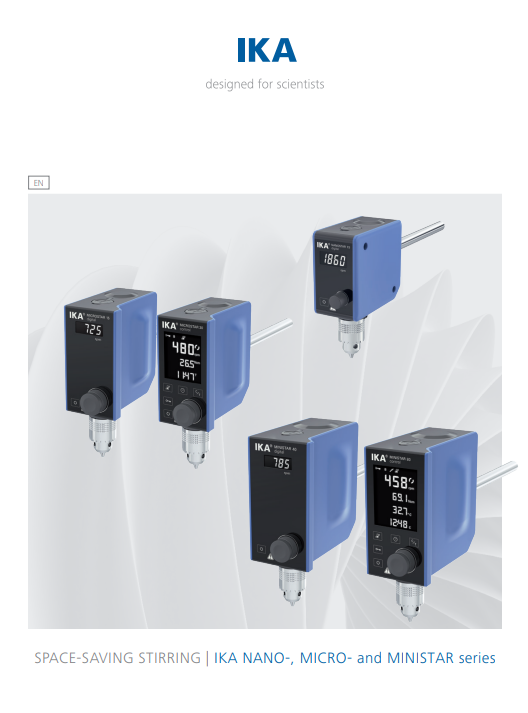 IKA NANO-, MICRO and MINISTAR series |
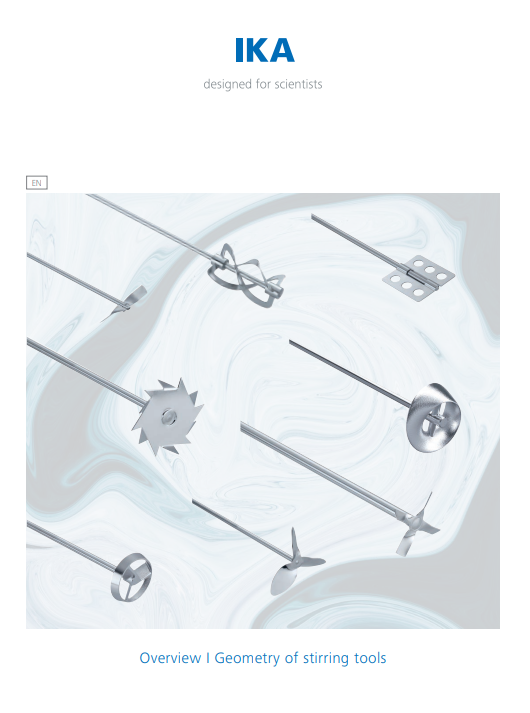 Geometry of stirring tools |
VIDEO
MICROSTAR control
Related Products
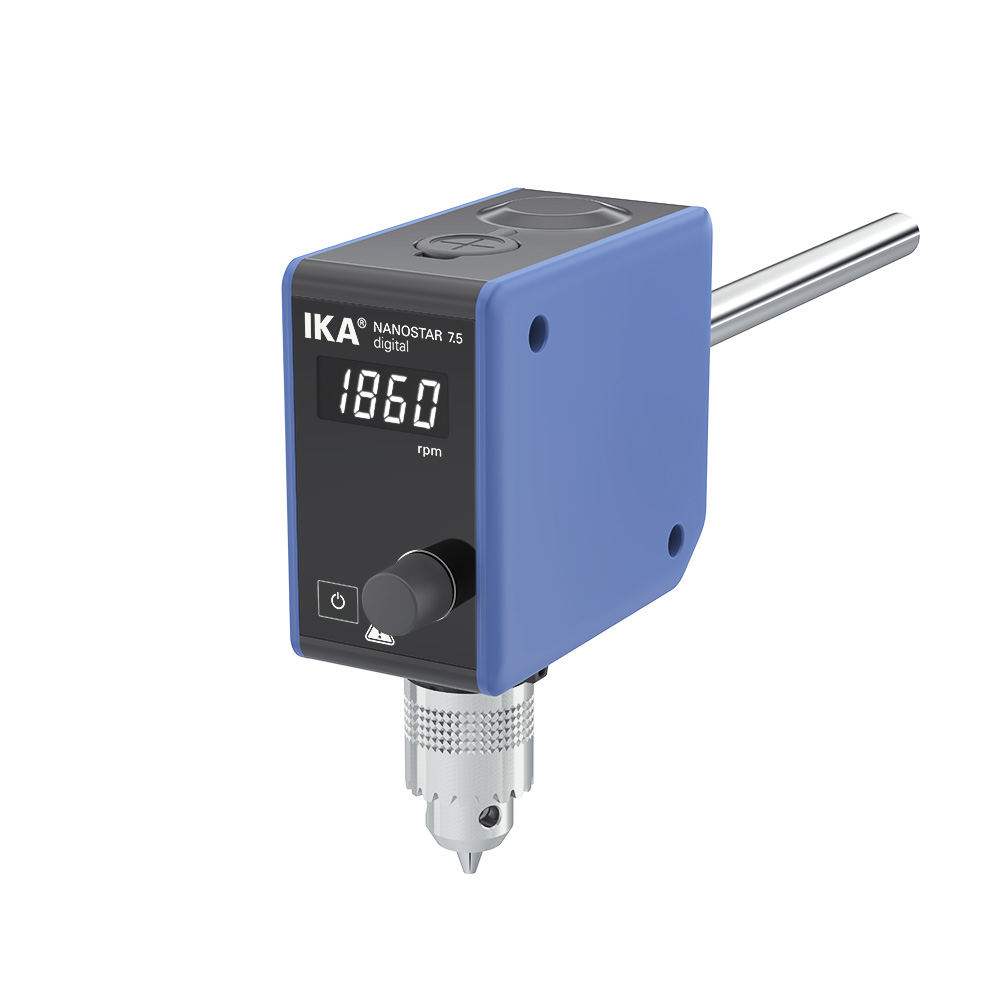
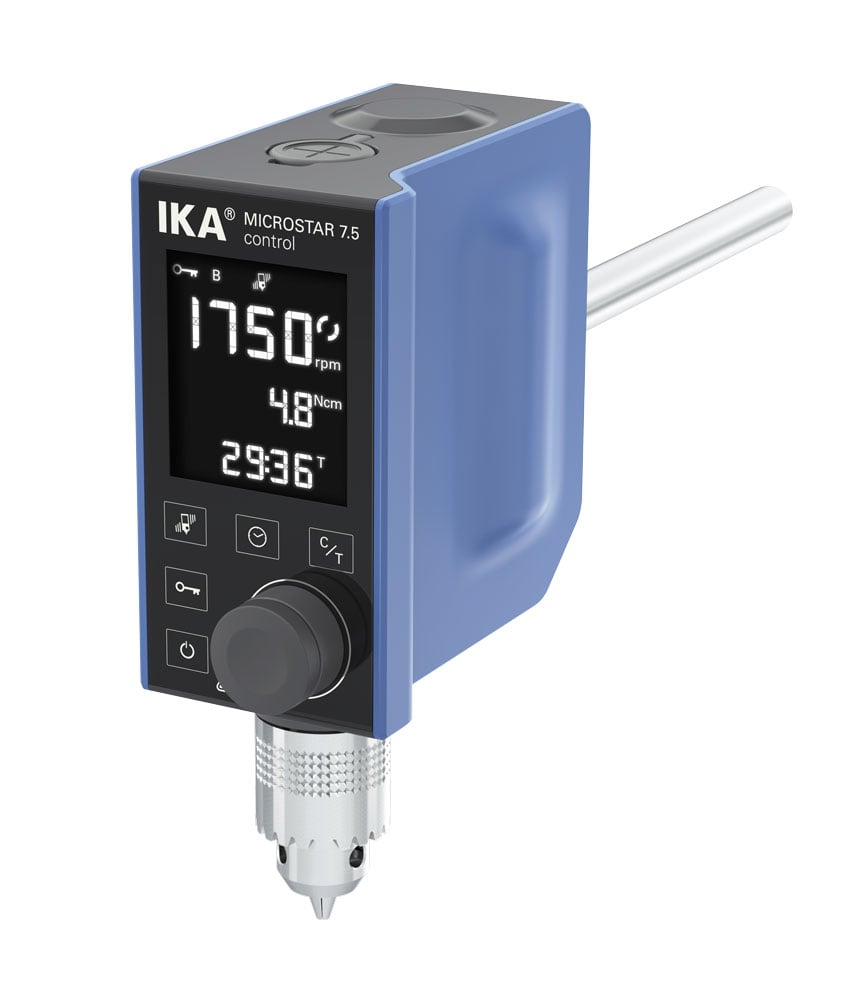
If you have any questions or wish to receive a personal quotation, please contact our sales team
请联系我们
< Back to Blog overview请联系我们