
< Back to Blog overview
22_06.png)
When creating any topical formulation one must consider the Relevant Material Attributes as well as the Critical Process Parameters.
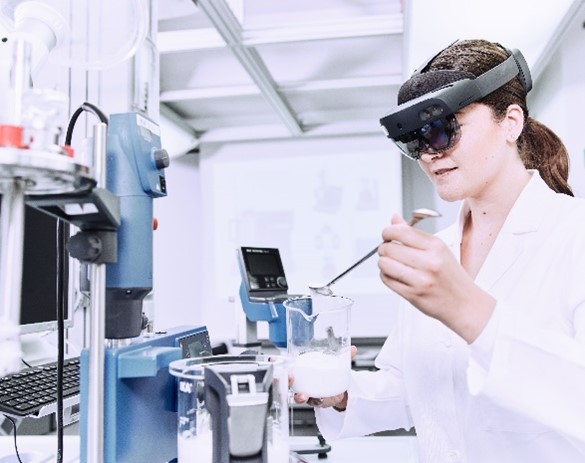
On the topic of heating application considerations one could weigh the benefits of aluminum or stainless steel vs ceramic heating magnetic stirrers.
The IKA Plate magnetic hotplate stirrer is a great tool for the stirring and heating of low viscosity Liquid-Liquid mixing. The aluminum and steel hotplate surface materials offer a great rate of heat transfer to the medium while the ceramic topped hotplate surface (like on the C-MAG) offers great chemical and scratch resistance.
Mixing
When considering Solid-Liquid mixing the most effective techniques usually include an Overhead Motor and Stirrer combination for the bulk mixing of materials. When Selecting an overhead motor it is important to consider the motor power (usually in Watts or Hp) and the motor torque. This will help you understand the motors capabilities in terms of total mixing volume and maximum viscosity the motor can handle.
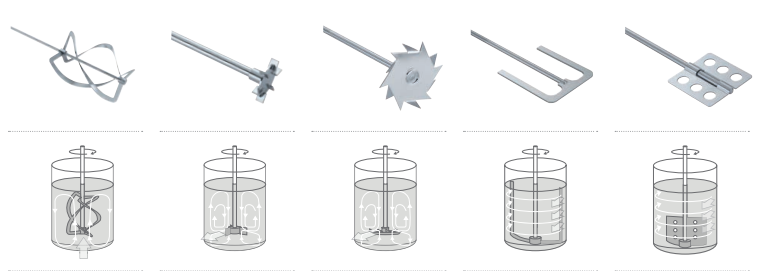
There are many factors to consider when selecting a stirrer to use with your overhead motor. These include vessel size (diameter and height), bulk viscosity, speed requirement, application outcome , flow pattern and shearing effect.
High Shear Mixing/Dispersing
Not all Solid-Liquid mixing process formulation is possible with an Overhead Motor and Stirrer alone. In many cases it is necessary to implement a high-shear crushing mixing technique for particle size reduction or emulsification. IKA’s ULTRA-TURRAX® Dispersers accomplish this high shear mixing technique by using rotor-stator technology and extremely high speeds from 3000-25,000 rpm compared to an overhead motor in the 1-2000rpm range.
Some factors to consider when choosing a dispersing tool are its crushing capabilities or in other words the ultimate fineness for emulsions and suspensions. This can be found in a technical data sheet for each tool design. When considering scaling benchtop to pilot or production scale some other calculations can help this process including Tip Speed, Shear Rate and Shear Frequency. Variables necessary for these scaling calculations are Diameter of rotor(m), Rotor Speed (1/min), Shear gap(m) and # of teeth of the rotor and stator.
Combining Processing with an IKA Lab Reactor
We saw previously the techniques and equipment necessary for successful benchtop processing include a heating source like a magnetic hotplate stirrer, a stirring source like an overhead motor and stirrer combination as well as a high-shear dispersion force like an IKA ULTRA-TURRAX® Disperser. In the case of the IKA LR1000 you can combine all 3 of these into one unit.
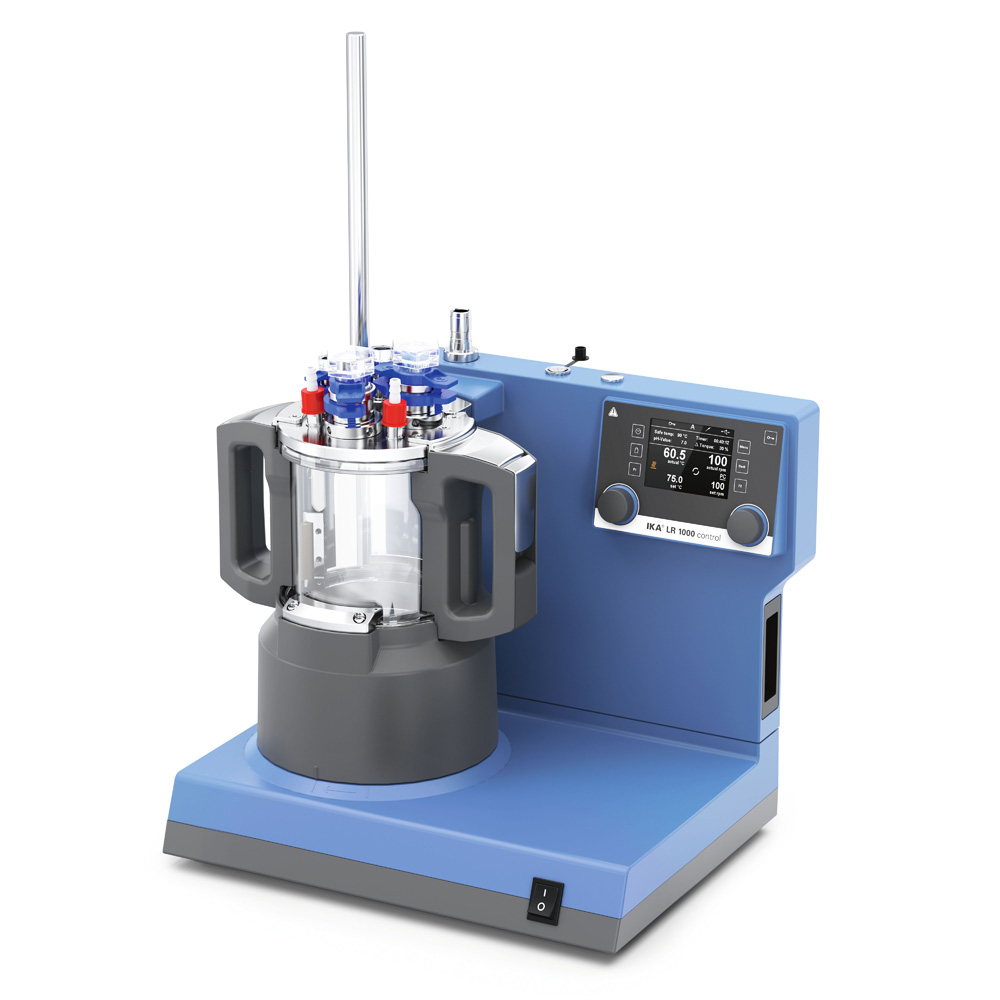
The LR 1000 control is a cost efficient, modular laboratory reactor designed to optimize chemical reaction processes as well as for heating, mixing, and dispersing tasks on a lab scale particularly in the cosmetic and pharmaceutical industry. The system can be adapted quickly and easily to a wide range of applications and specific requirements.
VIDEO
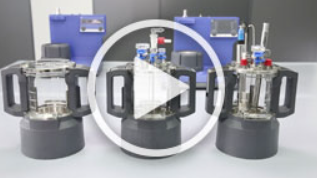
High Viscosity Reactors - L1000
Related Products
Benchtop Processing Considerations for Topical Formulation
Key Considerations for Bench-Top Processing in Topical Formulation
IKA as a leader in Laboratory and Analytical instrumentation offers insights into the considerations of bench top processing specifically designed for topical formulators and product developers.When creating any topical formulation one must consider the Relevant Material Attributes as well as the Critical Process Parameters.
Relevant Material Attributes would include
|
Critical Process Parameters would include
|
IKA offers a number of solutions for controlling your benchtop formula critical process parameters.
HeatingOn the topic of heating application considerations one could weigh the benefits of aluminum or stainless steel vs ceramic heating magnetic stirrers.
The IKA Plate magnetic hotplate stirrer is a great tool for the stirring and heating of low viscosity Liquid-Liquid mixing. The aluminum and steel hotplate surface materials offer a great rate of heat transfer to the medium while the ceramic topped hotplate surface (like on the C-MAG) offers great chemical and scratch resistance.
Mixing
When considering Solid-Liquid mixing the most effective techniques usually include an Overhead Motor and Stirrer combination for the bulk mixing of materials. When Selecting an overhead motor it is important to consider the motor power (usually in Watts or Hp) and the motor torque. This will help you understand the motors capabilities in terms of total mixing volume and maximum viscosity the motor can handle.
There are many factors to consider when selecting a stirrer to use with your overhead motor. These include vessel size (diameter and height), bulk viscosity, speed requirement, application outcome , flow pattern and shearing effect.
|
High Shear Mixing/Dispersing
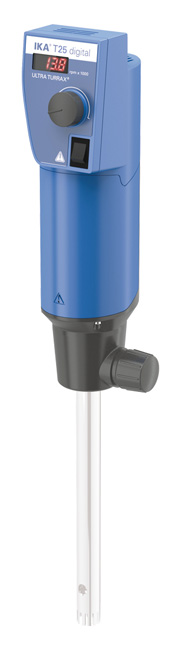
Not all Solid-Liquid mixing process formulation is possible with an Overhead Motor and Stirrer alone. In many cases it is necessary to implement a high-shear crushing mixing technique for particle size reduction or emulsification. IKA’s ULTRA-TURRAX® Dispersers accomplish this high shear mixing technique by using rotor-stator technology and extremely high speeds from 3000-25,000 rpm compared to an overhead motor in the 1-2000rpm range.
Some factors to consider when choosing a dispersing tool are its crushing capabilities or in other words the ultimate fineness for emulsions and suspensions. This can be found in a technical data sheet for each tool design. When considering scaling benchtop to pilot or production scale some other calculations can help this process including Tip Speed, Shear Rate and Shear Frequency. Variables necessary for these scaling calculations are Diameter of rotor(m), Rotor Speed (1/min), Shear gap(m) and # of teeth of the rotor and stator.
Combining Processing with an IKA Lab Reactor
We saw previously the techniques and equipment necessary for successful benchtop processing include a heating source like a magnetic hotplate stirrer, a stirring source like an overhead motor and stirrer combination as well as a high-shear dispersion force like an IKA ULTRA-TURRAX® Disperser. In the case of the IKA LR1000 you can combine all 3 of these into one unit.
The LR 1000 control is a cost efficient, modular laboratory reactor designed to optimize chemical reaction processes as well as for heating, mixing, and dispersing tasks on a lab scale particularly in the cosmetic and pharmaceutical industry. The system can be adapted quickly and easily to a wide range of applications and specific requirements.
Result :
Remember to consider all of the critical process parameters for your topical formulation- heating
- mixing
- manufacturing
 Reactor systems Flyer |
 Laboratory Reactor-Success Story |
VIDEO
High Viscosity Reactors - L1000
Related Products
 R290
R290
If you have any questions or wish to receive a personal quotation, please contact our sales team
请联系我们
< Back to Blog overview请联系我们